


A wedding invitation wrap gathers the pieces of your suite and creates a deliberate opening experience. It can add artwork, soften the view of the invitation, or simply keep the cards together.
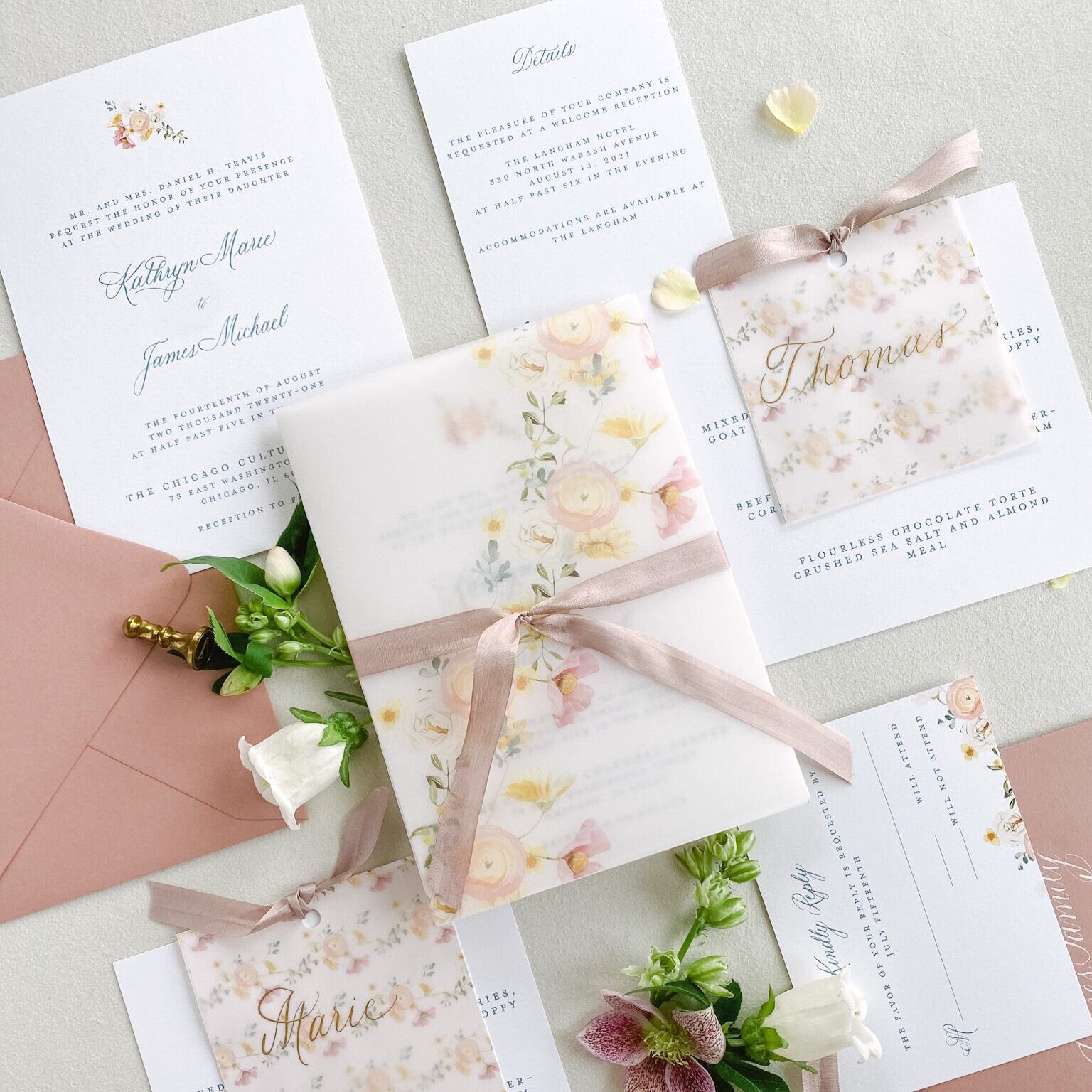
What a vellum wrap does
Vellum is a translucent paper that lets the invitation show through. Wrapped around a suite, it adds a soft layer without fully hiding the wording. A plain wrap feels restrained; a printed monogram, floral motif, or skyline can make it part of the story.
Choose one focal detail
Think about what guests should notice first. If the invitation already has prominent artwork, a simple wrap may be enough. If the invitation is spare, the wrap can introduce an illustration or pattern. Repeating every design element on every layer often makes the suite feel crowded.
Plan ribbon and wax seals together
Ribbon and wax seals can close a wrap or create a decorative finish. Their size, position, and thickness matter. A seal should complement the layout without covering important artwork, and the assembled suite must fit comfortably inside its envelope.
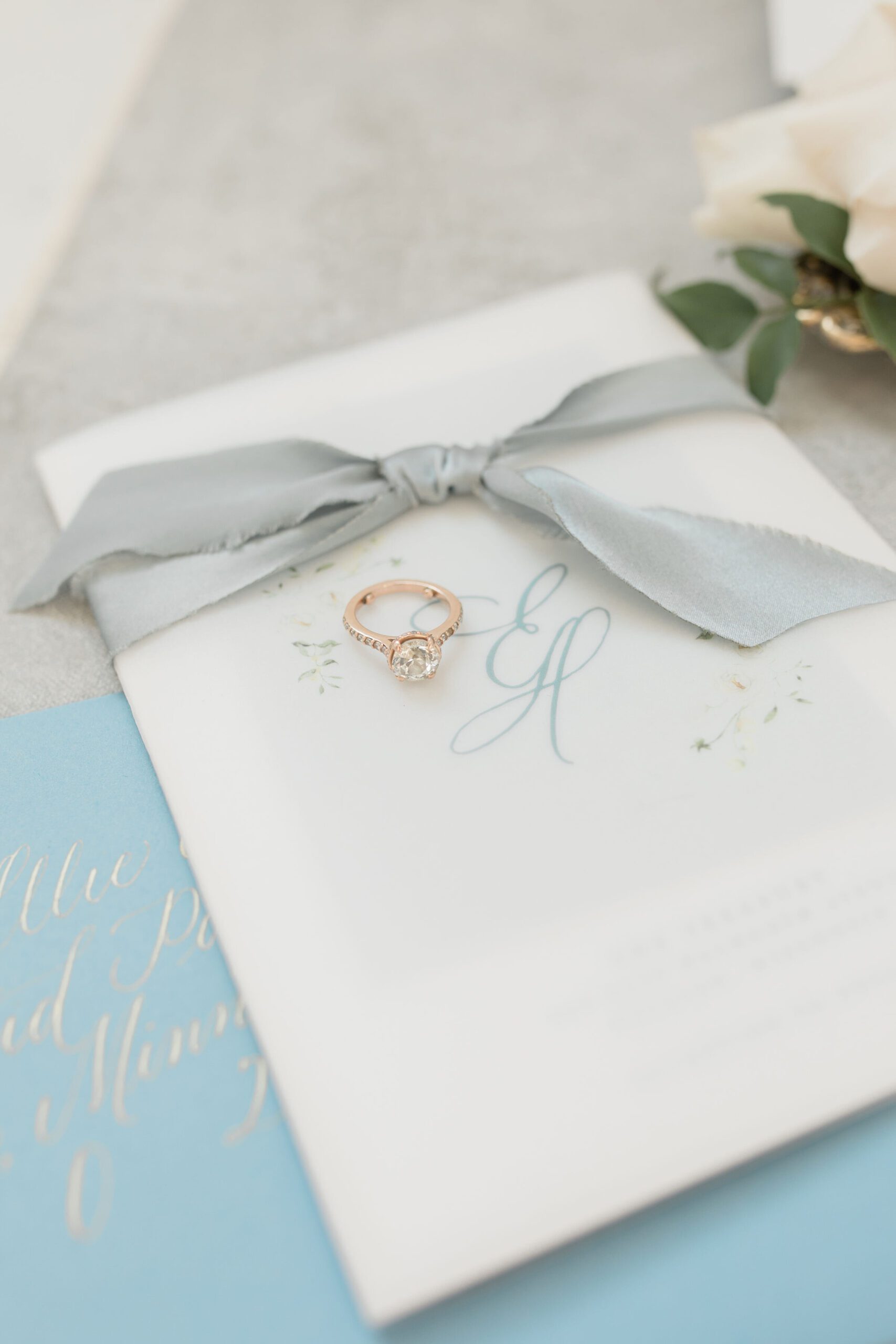
Check visibility and alignment
Translucency changes how overlapping text and artwork appear. Review a physical mockup with all inserts in their final order. Check folds, opening direction, and whether the wrap slips during handling. These small assembly decisions make a difference when many suites are prepared.
Allow for assembly and mailing
Wrapping, tying ribbon, and applying seals take time. Confirm who will assemble the invitations and when the finished pieces must arrive. Bring a complete sample to your postal provider before committing to postage.
Repeat the idea at the reception
A wrap motif can carry into menus, place cards, or a small day-of detail. It does not need to repeat literally everywhere. Read our finishing details guide for more ways to build a thoughtful suite.
Explore your stationery options with Lively House.
