


Printing changes the character of wedding stationery as much as the typography or paper. The right process depends on your artwork, the feel you want, and the production schedule.
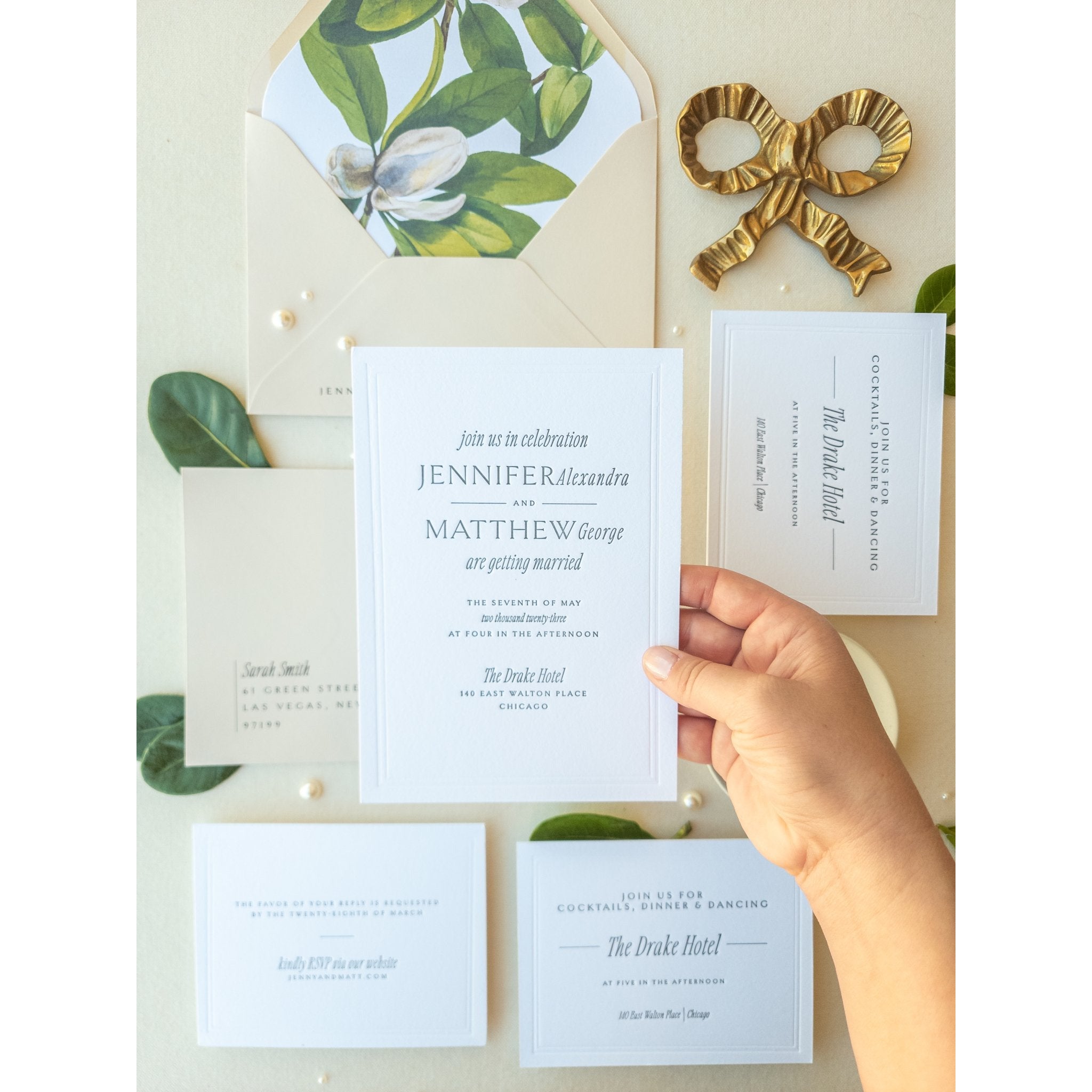
Digital printing
Digital printing is a versatile option for full-color artwork, illustrations, and clean typography. It produces a flat printed surface. It is often a practical choice for several coordinated pieces, though final pricing and timing depend on the stock, quantities, and finishing.
Letterpress
Letterpress uses a printing plate to press inked artwork into paper. Soft, suitable stocks can receive a tactile impression. Fine details, large solid areas, and additional ink colors need production planning. Review a real sample instead of judging the impression from a screen.
Foil stamping
Foil stamping transfers a foil finish using a die, heat, and pressure. It can bring metallic shine or an opaque accent to selected details. Foil is not automatically raised. The appearance depends on the stock, die, and press setup.
Engraving
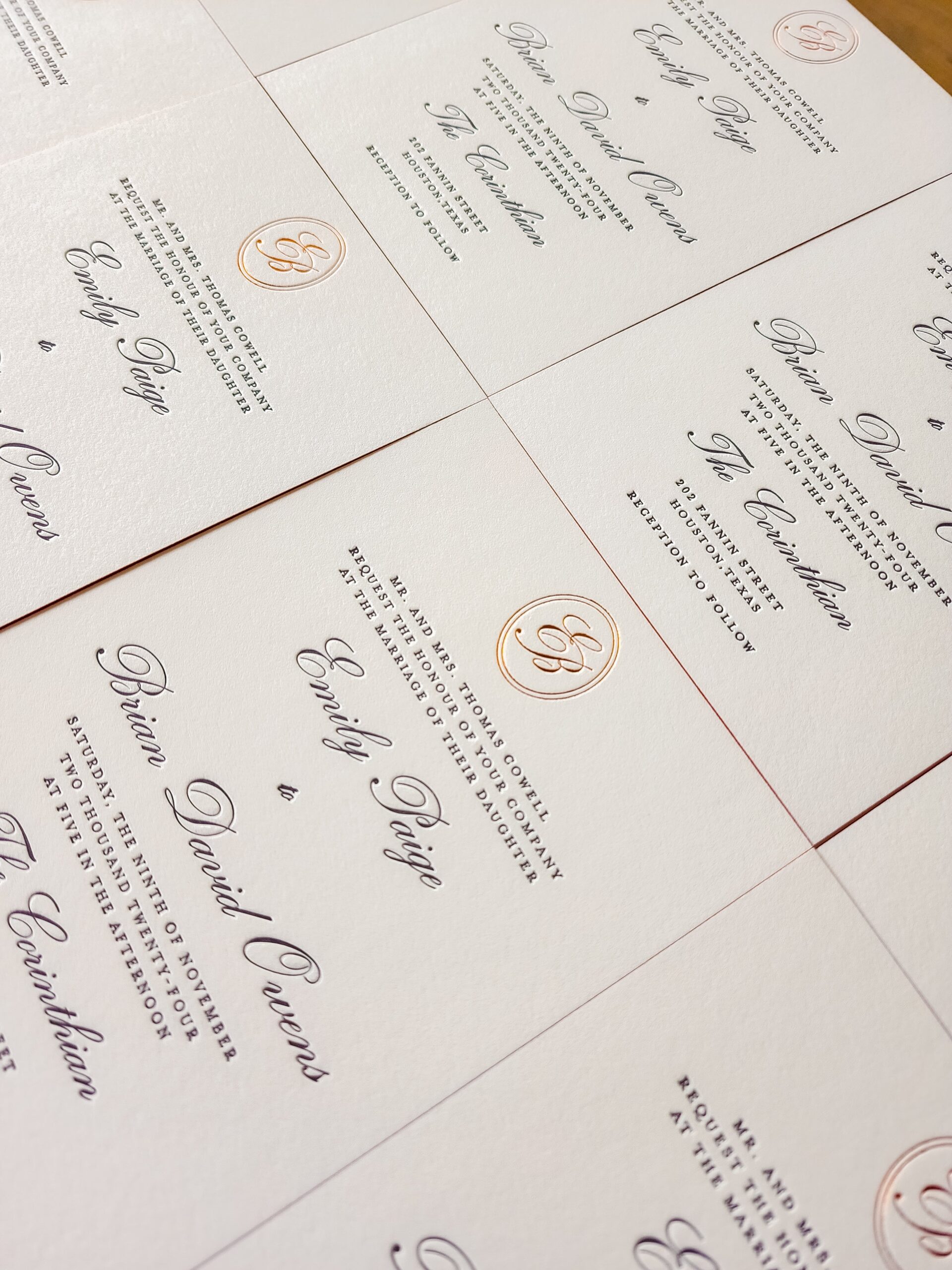
Engraving uses an engraved plate and pressure to create raised ink on the front of the sheet. Its crisp, tactile finish can suit formal stationery. It is distinct from letterpress, which presses the design into the paper.
Embossing and debossing
Embossing raises the paper itself; debossing presses a design into it. A blind finish uses no ink or foil. Sculpted embossing can add more dimensional detail and requires artwork and tooling designed for that effect. Ask to see the relevant sample before choosing.
Combine processes with intention
An illustrated invitation might pair digital artwork with foil names, or letterpress wording with a blind embossed monogram. Each process adds production steps. Choose the detail that matters most, then build the rest of the suite around it.
Plan paper, proofing, and timing
Paper compatibility and artwork limits should be resolved before the final proof. Production begins after approval, so leave time for printing, assembly, and mailing. Compare physical samples with our paper guide and plan backward with the stationery timeline.
Explore your stationery options with Lively House.
