


Embossing gives wedding invitations dimension by raising the paper itself. It can be quiet and tonal or more prominent, depending on the artwork and the finish.
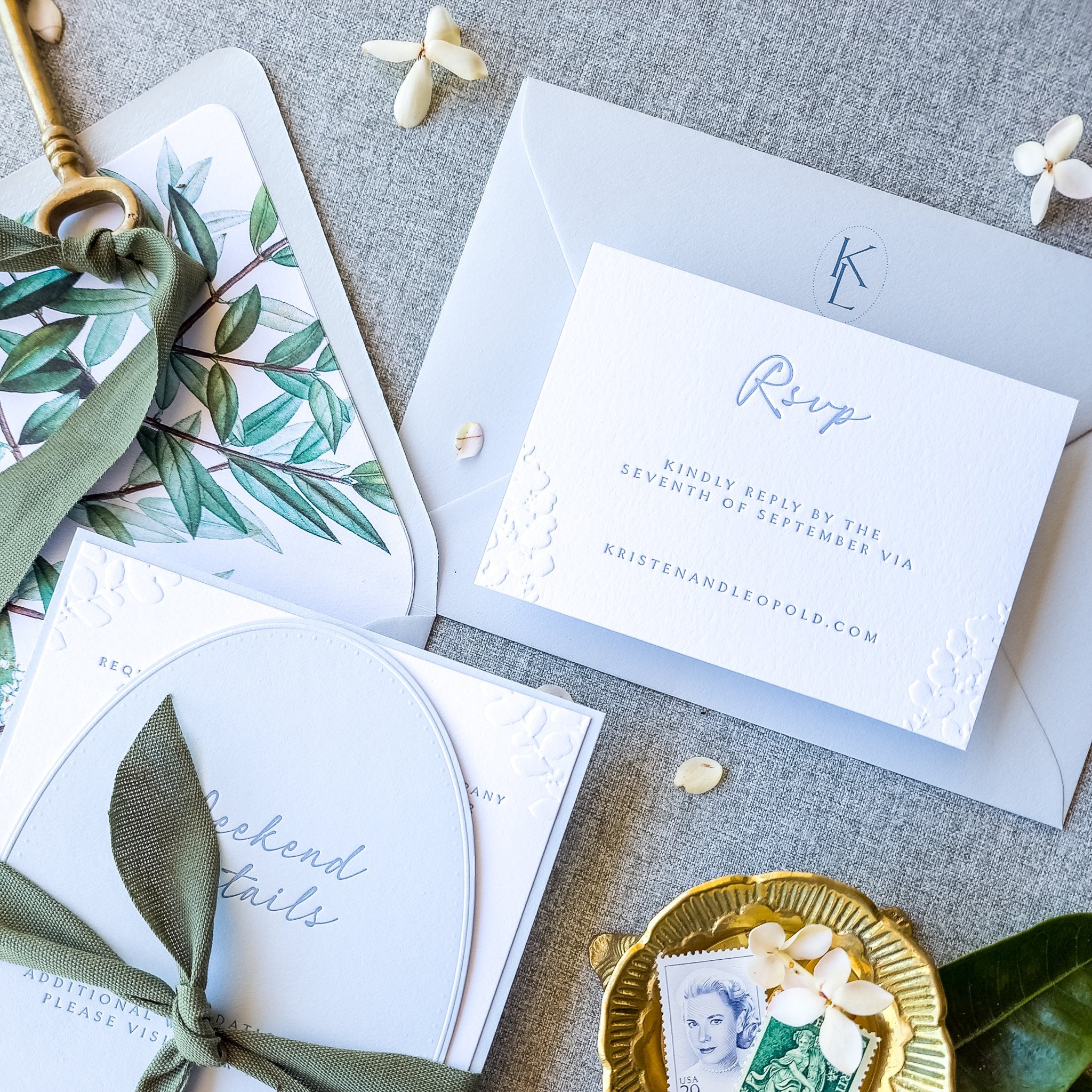
How embossing works
A matched set of dies shapes the paper into a raised design. Blind embossing uses no ink or foil, so light and shadow reveal the detail. Debossing creates the opposite effect by pressing the artwork into the surface.
Choose artwork with room to breathe
A monogram, border, or selected motif can work beautifully in relief. Very fine lines and tiny wording need careful review. The die maker and printer should evaluate the artwork before the design is treated as production-ready.
Understand sculpted embossing
Sculpted embossing can create more varied dimensional contours than a simple raised outline. It requires tooling and artwork suited to the intended effect. A sample is the best way to understand the difference before budgeting for it.
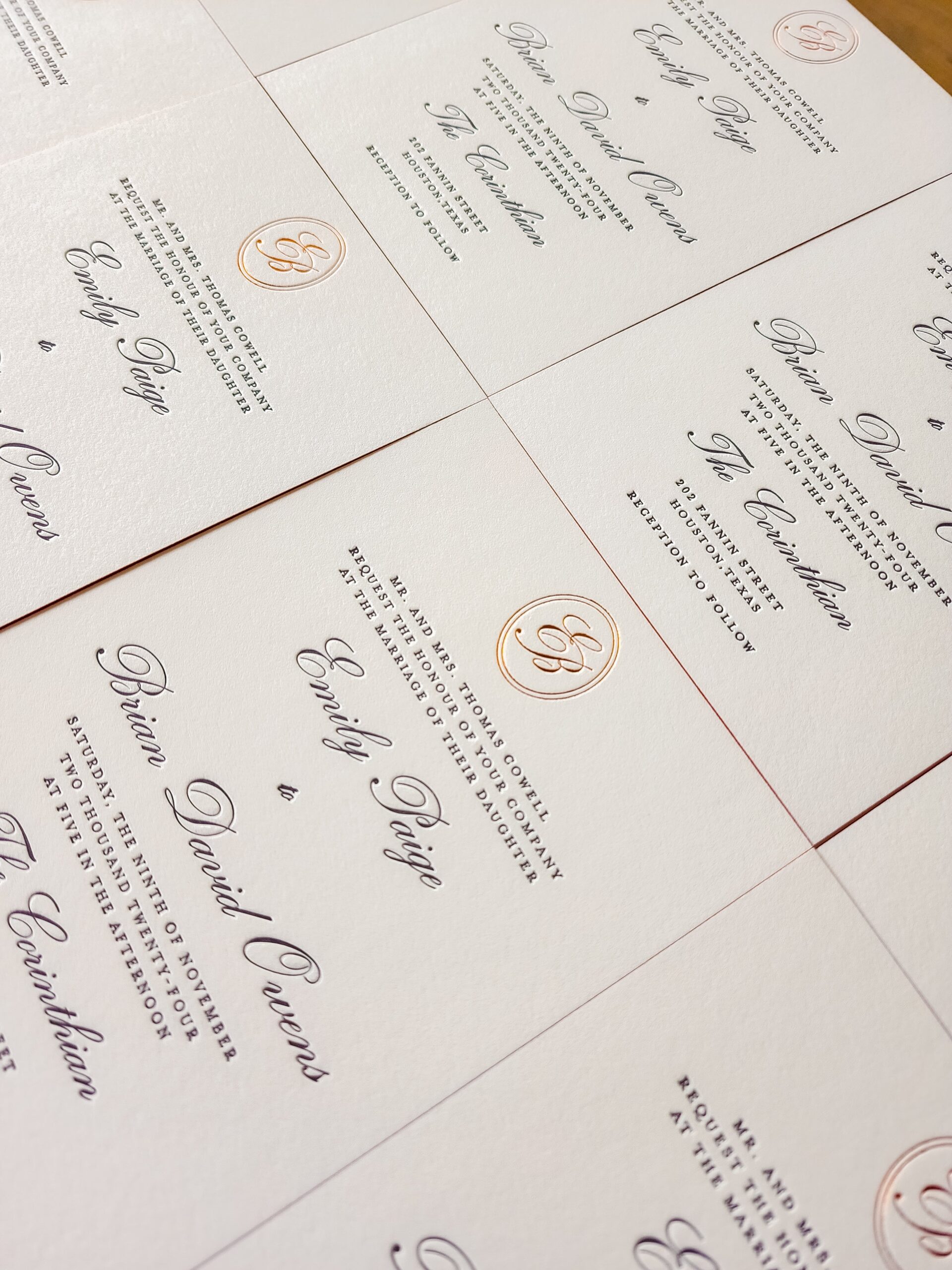
Pair the stock with the process
Paper thickness and flexibility affect how the design forms and how it appears on the reverse. Review the actual stock and discuss any printing or mounting on the other side. Not every paper will produce the same relief.
Compare other tactile finishes
Raised paper is different from raised ink in engraving and from metallic foil stamping. If the goal is shine, relief, or an impression, name that goal clearly so your stationer can recommend the process that delivers it.
Plan tooling and approval
Embossing adds a production step and may require a custom die. Confirm the artwork before tooling is made, and build the production window into your mailing schedule. Our printing guide compares the options.
Explore your stationery options with Lively House.
